دستهبندی: کتاب
َAuthor: Dr. Gabriel Mohagheghi
language: English
ISBN: 9786228088266
نوع جلد: سخت
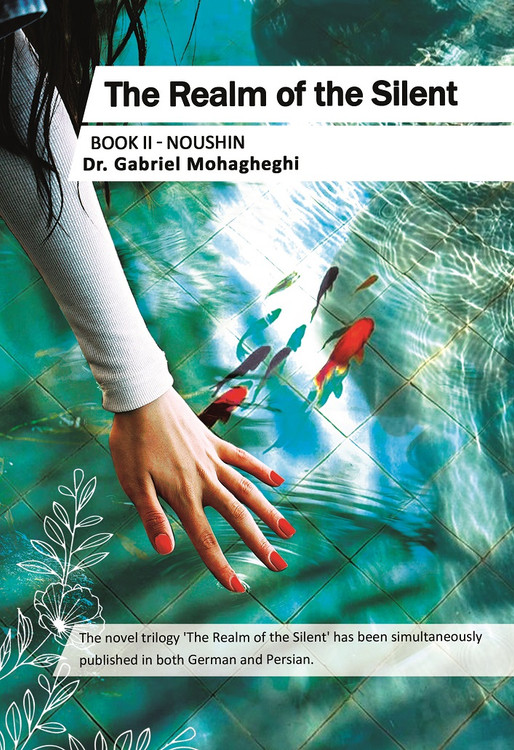
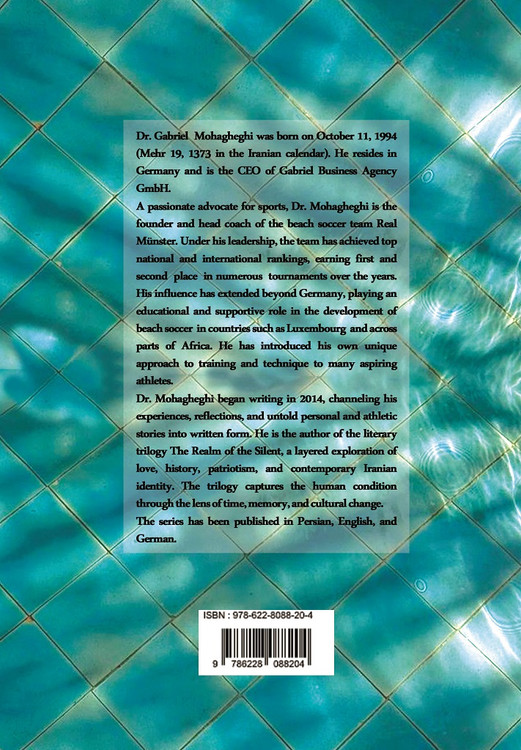
َAuthor
Dr. Gabriel Mohagheghi
language
English
ISBN
9786228088266
نوع جلد
سخت
قطع
رقعی
تعداد صفحات
335
وزن
510 گرم
The motivation behind my writing does not lie solely in a passion for literature and art; it is equally an effort to build a bridge of connection between myself and my compatriots beyond the borders of Iran. Distance from my homeland has led me to believe that literature can serve as a common language, a means of reunion with a people whose destiny and history are forever alive within me. For this reason, I intend from now on to appear more prolific than ever in the realm of writing, sharing my experiences and concerns through fresh narratives. Moreover, the translation of my works into other languages is not merely a literary endeavor, but a cultural effort-an attempt to introduce a glimpse of Iranian literature, history, and culture to an international readership, so that they may recognize that my land, beyond superficial images, carries within it a rich treasure of narratives and human emotions.
Although I have lived outside the borders of Iran for many years, my emotional and intellectual bond with my homeland has never been severed. Geographic distance has not diminished this patriotic attachment; rather, it has spurred me to delve even more deeply into the study of Iran’s history, art, and subcultures. I believe that literary narrative gains its true life only when it is rooted in historical and social awareness. For this reason, every page of The Realm of the Silent is the result of an effort to recreate a space born of the collective memory of the Iranian people-a space that, though shaped with a literary and fictional lens, draws its essence from history and from a love for homeland and compatriots.
The trilogy The Realm of the Silent is the fruit of more than a decade of study, research, and reexamination of diverse sources on art and social history in mid-20th-century Iran. During the writing process, great effort was made to reconstruct, with precision, details of places, neighborhoods, customs, and even the everyday lifestyle of the people of old Tehran, drawing on written sources such as newspapers, historical documents, and oral accounts. This meticulousness served only one purpose: that the reader, upon encountering the text, might feel immersed in the living atmosphere of that time and truly connect with the characters and situations of the story.
Yet The Realm of the Silent is not merely a historical or scholarly text. It is a narrative both romantic and fictional, built upon the social and cultural realities of that era. My endeavor was to weave an organic link between “history” and “literature,” so that history would not remain a silent backdrop, but instead become interwoven with the lives of the characters, influencing their decisions, destinies, and emotions.
This work may be regarded as an attempt to portray how subcultures, family traditions, and social structures shape the personal and emotional lives of individuals. Love, here, is not merely the devotion of two people; it is also a lens through which the conflicts, tensions, and contradictions of a society caught between tradition and modernity, between individual desires and collective pressures, are revealed.
The characters of this novel, though embedded within the story, are above all carriers of deeply human concerns-freedom, loyalty, sacrifice, or resistance against destiny.
The style of this trilogy can be described as a fusion of narrative storytelling and literary re-creation, with strands of social naturalism. My aim has been to forge a bridge-through a language that is simple yet polished and literary-between the documentary precision of history and the inner passion of storytelling. Behind every scene lies both the shadow of a historical reality and a fictional character capable of carrying the reader along.
Another prominent feature of this work is the use of polyphony-a technique I had already employed in Ava, the first book of this trilogy. It is a narrative method in which stories do not emerge from a single, limited perspective, but rather through a chorus of voices and viewpoints.
In The Realm of the Silent, the narrator’s voice is never just one. With each chapter, perspectives shift, and the novel becomes a tapestry of monologues, whispers, memories, letters, confessions, and inner narratives of the characters, which together form a fuller image of reality.
This multiplicity of voices allows the reader not only to follow the judgment of a single narrator, but also to confront accounts that at times contradict and at times complement one another, engaging them in the discovery of truth. Such an approach both reflects the multilayered reality of social life and creates a space in which every character-even those at the margins-has the chance to speak and to be heard.
Polyphony in this novel is not a mere imitation of classical Western models such as Dostoevsky or Faulkner. Rather, it is an attempt to localize this technique within the context of modern Iranian history. Here, the diverse voices represent subcultures, social classes, and genders; their tensions and juxtapositions mirror the conflicts and contradictions of Iranian society in the mid-20th century.
Thus, The Realm of the Silent is not only a romantic or social narrative, but also a space where voices interweave, creating a hidden dialogue among generations, genders, and classes-a dialogue that ultimately invites the reader to reflect on the meaning of truth, justice, and individual as well as collective destiny.
In the end, The Realm of the Silent is an invitation to contemplate the meaning of life, love, family, and society-an invitation to reconsider how even the smallest of personal choices can shape greater social currents and collective fate. The novel seeks to show that the silence of many individuals throughout history contains within itself the most eloquent of stories.
I hope that the result of years of effort will offer literature enthusiasts, and seekers of history and art, a profound and thought-provoking experience. If I have succeeded in immersing you, even briefly, in the atmosphere of that era, and if my pen resonates with your heart, then I consider myself richly rewarded-for your satisfaction is the greatest treasure and the truest motivation to continue my path as a writer.
The Realm of the Silent trilogy has been published in three Languages-Persian, English, and German. I hope it will meet your favor.